The Third Menu Board: Making Bomb Burger’s Drink Cooler Feel Native
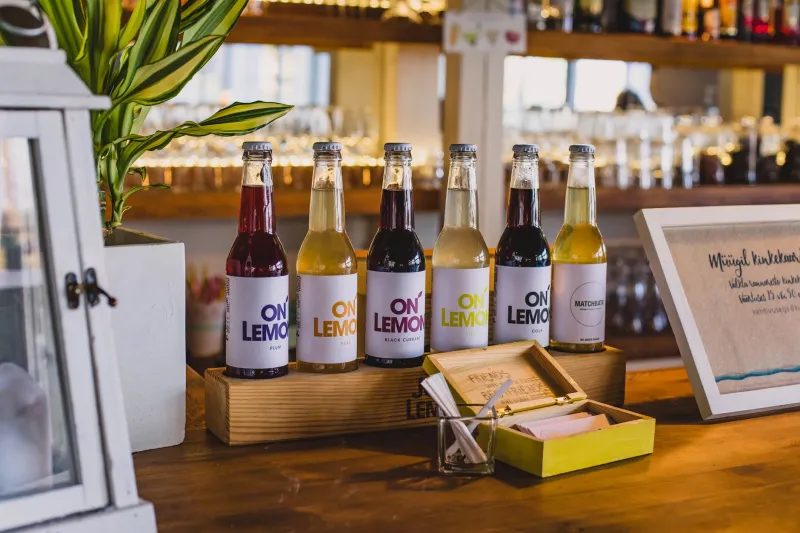
Most burger franchises treat the drink cooler like plumbing: necessary, invisible, and identical from coast to coast. Bomb Burger can do better without turning the counter into a craft cocktail bar. The cooler is a small piece of real estate, but it sits at eye level, it touches every order, and it gives a new location one more way to sound like the neighborhood rather than a spreadsheet with a drive-thru.
The goal is not a seventy-item beverage program. It is two or three local choices that fit the existing operation, tell a short story, and earn their space in the cooler. Think of it as a third menu board: smaller than burgers and sides, but still part of the guest’s read on the place.
Start With Two Slots, Not a Second Menu
A local drink program works best when it is deliberately narrow. Keep the national lineup as the reliable backbone. Add one everyday local option and one rotating or seasonal option. That is enough to signal local roots without forcing crew members to memorize a novel every shift.
The everyday slot should be operationally boring in the best way: a bottled or canned regional soda, a shelf-stable tea, or a lemonade that arrives ready to serve. The rotating slot can change quarterly or around local events, but it should use the same service motion. If a drink requires shaking, muddling, garnishing, or a new piece of equipment, it probably belongs in a limited test, not the permanent cooler.
This two-slot limit also protects margins. Local beverages often carry a higher wholesale cost than national contracts. A small, curated set lets a franchisee negotiate better terms on fewer SKUs and track mix without drowning in data.
The Partner Test: Five Questions Before You Pour
A local drink partner is a supplier, a storyteller, and a representative of the brand at the same time. Franchisees should ask five plain questions before adding any product.
First, can the maker deliver consistently? A great farmers-market soda is not automatically a great restaurant beverage. Ask about production capacity, lead times, and what happens during a busy weekend.
Second, what is the distribution path? Direct delivery from a local producer can be a selling point, but it can also create gaps when the maker is at a festival or short on bottles. A broadline distributor with local brands may be less romantic but more reliable.
Third, does the packaging fit the cooler and the POS? Cans and standard bottles are easier than odd shapes. If the product needs special shelving or a new cooler configuration, the operational cost rises fast.
Fourth, what is the wholesale price and case pack? Local does not mean unlimited margin. Get pricing in writing, including deposit or returnable container rules. Compare cost per serving, not cost per case.
Fifth, can the partner tell the story in one sentence? Guests do not need a documentary. They need a reason to try it. A line like ‘made two towns over’ or ‘brewed with local cane sugar’ is enough if it is true and easy for crew to repeat.
Put It Where the Line Can See It
Menu placement is where local drink programs often fail. A local soda hidden behind the national cola button is a secret, not a strategy. Give the local option a clear POS button, a cooler door position at eye level, and a short menu-board mention.
The placement should also respect speed. If the drink is grab-and-go, keep it in the same reach-in cooler as the national bottles. If it is a batch tea or lemonade, station it next to the fountain so the crew can pour without crossing the kitchen. The guest should not wait longer for a local drink than for a national one.
Crew training can be brief: one sentence on what it is, one sentence on why it is here, and a clear rule for when it is sold out. That is enough. The cooler should feel deliberate, not cluttered.
Price With a Floor and a Ceiling
Local beverages usually need a modest premium, but the price still has to make sense next to the burger. A practical guardrail is to keep the local drink within a narrow band of the national options, often fifty cents to a dollar more. If the product demands a much higher price, it may work as a limited seasonal item but not as an everyday pour.
Franchisees should set a cost-of-goods target before choosing a partner, not after. Beverages are high-margin categories, and a local product that erodes that margin too far is not doing the neighborhood any favors. Track mix, waste, and breakage weekly during the first month. If a local drink sells well but creates constant out-of-stocks, the problem is the supply plan, not the concept.
Run a Thirty-Day Test, Then Decide
A local drink should earn its permanent spot. Run a thirty-day test with a clear scorecard: units sold per day, share of total drinks, average ticket impact, crew feedback, out-of-stock days, and waste. Keep the product if it holds its own without slowing service. Cut it if it becomes a conversation piece that only the crew enjoys.
The test also gives the franchisee a story to share with the local maker and the neighborhood. A short run can become a launch, and a launch can become a small ritual. That is how a cooler starts to feel native.
What Native Tastes Like
In the Midwest, a local root beer or cream soda can be an easy win. In the South, a regional sweet tea or a nearby lemonade brand may fit the burger menu better than another national cola. In the Northeast, a small-batch ginger ale or a local sparkling water can give the cooler a sense of place. On the West Coast, a craft citrus soda or a local cold brew might match the daypart mix.
The exact product matters less than the discipline behind it. Bomb Burger’s growth depends on staying local, and the drink cooler is one of the simplest places to prove that promise. Two slots, five partner questions, one clear price band, and a thirty-day test are enough to turn a forgotten cooler into a small handshake with the block.