Read the Block Before You Sign: Finding Bomb Burger Sites With a Story Already in Motion
Real estate spreadsheets are good at counting cars. They are bad at explaining why people linger. They can tell you how many rooftops sit within three miles, how many vehicles pass the curb, and what the lease will cost per square foot. They cannot tell you whether the block already has a food culture worth joining.
That is the argument for treating site selection as story selection. Bomb Burger is built on big flavor and local roots. A building alone does not deliver either. The block around the building does. Choose a site with its own identity and the restaurant inherits context, foot traffic, and a reason for people to care. Choose a cookie-cutter pad and the franchisee has to manufacture all of that after opening.
This is not a case for romanticizing old buildings. It is a case for reading a site the way a neighbor reads it.
Traffic Is Behavior, Not Just Volume
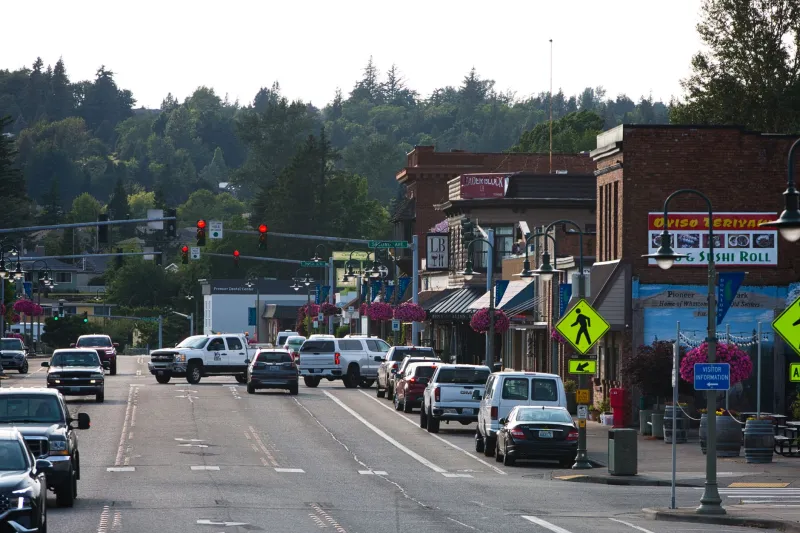
A traffic count tells you how many people pass. It does not tell you what they are doing. Stand on the corner at three different times: morning, after school, and Friday evening. Watch where people walk with purpose and where they wander. Notice whether they carry coffee, groceries, strollers, or takeout bags. Look at crosswalks, parking patterns, and whether one side of the street feels alive while the other feels like a shortcut.
A strip center can post impressive numbers and still feel like a place people leave as soon as they park. A Main Street block can show lower counts and higher dwell time. For Bomb Burger, dwell time matters. You want the block where people already linger, not just the road where they already drive.
Read the Restaurant Mix Like a Conversation
Nearby restaurants are not automatically competitors. A cluster of food options can signal that the neighborhood has decided to eat there. The useful question is whether Bomb Burger adds something to the conversation or repeats it. Coffee, pizza, tacos, ice cream, and a bakery can all feed the same rhythm. Three burger concepts within two blocks require a sharper reason to exist.
Look also at the local-to-chain ratio. A block with several independent operators, a hardware store, a barber, and a library feels different from a row of identical pads. Neither is automatically right, but they ask different things of the franchisee. One says, join us. The other says, explain why you are here.
Find the Third Places
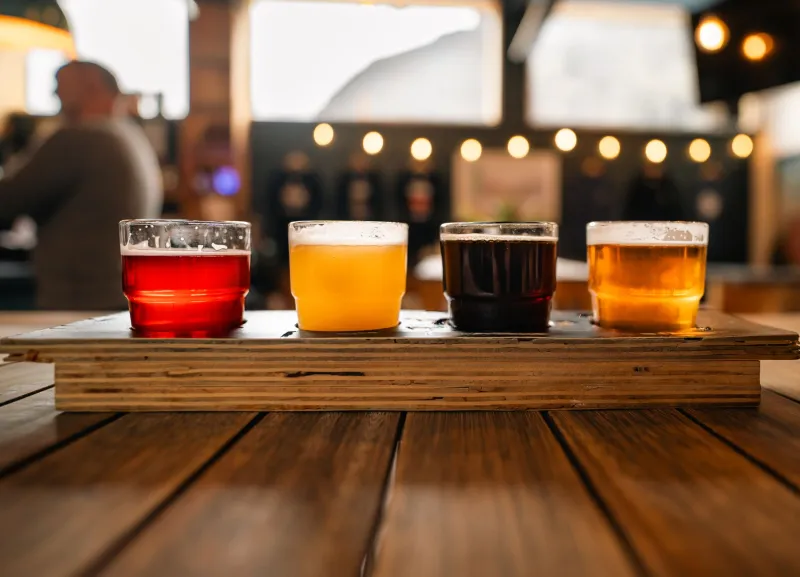
Every neighborhood has gathering spots that are not home and not work. A park, a library, a barbershop, a community center, a church, a gym, or a brewery can create repeat rhythms. A Bomb Burger within a short walk of those places gets a steady stream of people who already have a reason to be nearby.
But proximity is not enough. The site needs visibility and a comfortable walk. A gathering spot two blocks away behind a parking garage is not the same as one across a safe crosswalk. Walk the route yourself. If you would not do it in the rain, neither will a family with two kids.
The Strip Center Trap
Strip centers are convenient. They offer parking, clear access, and often a newer building with fewer surprises. Those are real advantages. The trap is assuming convenience is a story. If the site's best quality is easy access from the highway, the restaurant will need to spend money teaching people why it matters.
That does not make every strip center wrong. A strong anchor tenant, a busy grocery store, or a popular gym can create its own neighborhood logic. The point is to be honest about the marketing bill. A generic site can work, but it usually requires more paid media, more grand-opening theater, and more time to become familiar.
What a Story-Ready Site Looks Like
A story-ready site has a few recognizable ingredients. There is a landmark nearby that people already use to give directions. There is a mix of local businesses and complementary restaurants. There is a gathering place within a five-minute walk. There is a community calendar with events that already draw people to the block. The landlord wants a local operator, not just a national name. The building has enough character to adapt without becoming a museum piece.
Most importantly, you can finish this sentence: Bomb Burger is on the block where blank. If the blank is empty, the site may still be viable, but it will need a story built from scratch. That is not impossible. It is just more expensive and slower.
The Marketing Budget You Do Not Have to Spend
A site with an existing food story does some of the marketing before opening day. Neighbors recognize the corner. Local businesses cross-promote because they want the block to work. The first wave of customers arrives with context instead of confusion. A site without that context needs paid ads to answer basic questions: where are you, what are you, and why should I leave my usual spot?
Franchisees should weigh that gap against the lease. A cheaper building in an anonymous center can be eaten alive by acquisition costs. A higher rent on a block with real identity can pay back through word of mouth, walk-up traffic, and local press that actually wants to tell the story. Run the numbers both ways. Story is not a substitute for math. It is a factor in the math.
Do Not Romanticize Bad Real Estate
None of this means ignoring the basics. Access, parking, delivery routes, build-out costs, utilities, and lease terms still decide whether a restaurant survives. A beautiful block with terrible loading access is still a bad site. A historic building with a charming facade and a grease trap from 1972 is still a risk.
Use story as a tiebreaker and a multiplier, not a magic trick. Score the hard factors first. Then score the block. If two sites are close on operations, choose the one that gives Bomb Burger a neighborhood to join. That is where the brand gets to be local in a way that feels earned.
The best Bomb Burger site will not just give a franchisee a building. It will give them a first sentence. The right block already knows what it wants to say.