The Menu Is Not a Town Hall: A Bomb Burger Franchisee's Case for Restraint
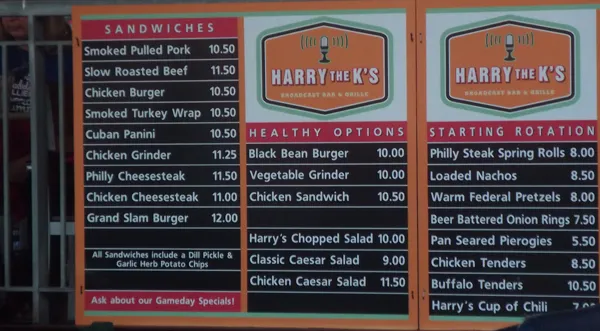
Photo: Go Phightins!, CC BY-SA 3.0, via Wikimedia Commons
Every new Bomb Burger franchisee learns the same lesson in the first ninety days: people have opinions. A regular wants their aunt's chili recipe on the menu. A neighbor wants a gluten-free version of everything. A local farmer wants their heirloom tomato featured permanently. A customer saw a trend online and asks why the kitchen does not do it. All of it comes from a good place. None of it automatically belongs on the menu.
Local-first franchising has a real risk: it can be misread as local-everything. That is a trap. A menu is not a town hall. It is an operating system. Every item you add takes up line space, training time, inventory, and customer attention. Restraint is not a rejection of local flavor. It is what makes local flavor credible.
Local-First Is Not Local-Everything
A Bomb Burger can be deeply local without becoming a different restaurant every week. Local shows up in sourcing, partnerships, stories, and limited-time features. It shows up in who you buy from and how you talk about them. It does not require you to say yes to every request that walks through the door. In fact, saying yes to everything usually makes the local story weaker because the core menu gets muddy and the kitchen gets slower.
The customer does not need a hundred choices. They need a burger they can trust, a line that moves, and a few genuine reasons to feel connected to the place. That is a stronger local identity than a menu board covered in good intentions.
The Four-Question Scorecard
Before any new item gets a real test, run it through four questions. Score each one from one to five, and require a minimum total before it moves forward. The exact number matters less than the discipline of asking.
First: can we execute this at 7:45 on a Friday with a new hire on the grill? If the answer is no, the item is not ready. Second: does it protect speed and consistency across every shift? A item that only works when the owner is on the line is not a menu item. It is a hobby.
Third: does it earn its margin after labor, waste, and training? Local ingredients can be more expensive, and that is fine if the price and the mix support it. It is not fine if the item quietly erodes the store's contribution margin. Fourth: does it deepen the local story without confusing the core menu? If a customer needs a paragraph to understand why the item exists, the menu is doing too much.
A simple scorecard turns a heated request into a business conversation. It also gives the crew a shared language. The question is not whether we like the idea. The question is whether the idea can survive a real kitchen.
Decision Rules That Save the Line
A few rules keep the menu honest. Run one local limited-time item at a time. That gives the feature room to breathe and keeps the crew from juggling three new builds. Do not make a permanent menu change from a single request, even a passionate one. Test it, track it, and decide with data.
If a family recipe cannot scale, it can still be honored in a community event or a one-store special. If a trend requires new equipment or a new station, the answer is usually no. If an item adds more than a few seconds to the line during peak, it needs a very good reason. And if the core menu is already working, protect it. Core menu changes should be rare, deliberate, and tested.
How to Say No Without Losing the Neighbor
Tone matters as much as the decision. A flat no can feel like a closed door. A clear no with an alternative keeps the relationship alive. Try: That is not a fit for our core menu, but it might be perfect for our next local-maker swap. Or: We cannot add it full time, but we can feature your ingredient in a sauce for a month. Or: Let us put it on the request list and revisit it after the holidays.
Keep a simple request log. Write down the idea, who asked, and what happened. Follow up when something changes. Do not promise a test you cannot run. Do not let a polite maybe become an expectation. The goal is to be generous with attention and honest about capacity.
The Cost of Yes
Every yes has a hidden invoice. It shows up as extra prep, extra training, extra inventory, extra waste, and extra chances for a mistake. It shows up as a crew that cannot find the build card during a rush. It shows up as a customer who loved a special and is disappointed when it disappears because the kitchen could not sustain it.
Menu restraint is not about being boring. It is about being dependable. A Bomb Burger that does a few things well can still tell a local story every week. A Bomb Burger that tries to honor every request may end up honoring none of them well.
What Restraint Buys You
Restraint buys speed. It buys consistency. It buys a crew that knows the menu cold. It buys margins that can support better ingredients and better pay. Most of all, it buys credibility. When Bomb Burger does feature a local maker or a neighborhood request, the customer knows it is not random. It earned its spot.
That is the case for saying less. The menu is not a town hall. It is a promise. Keep it clear, keep it fast, and make every local yes count.